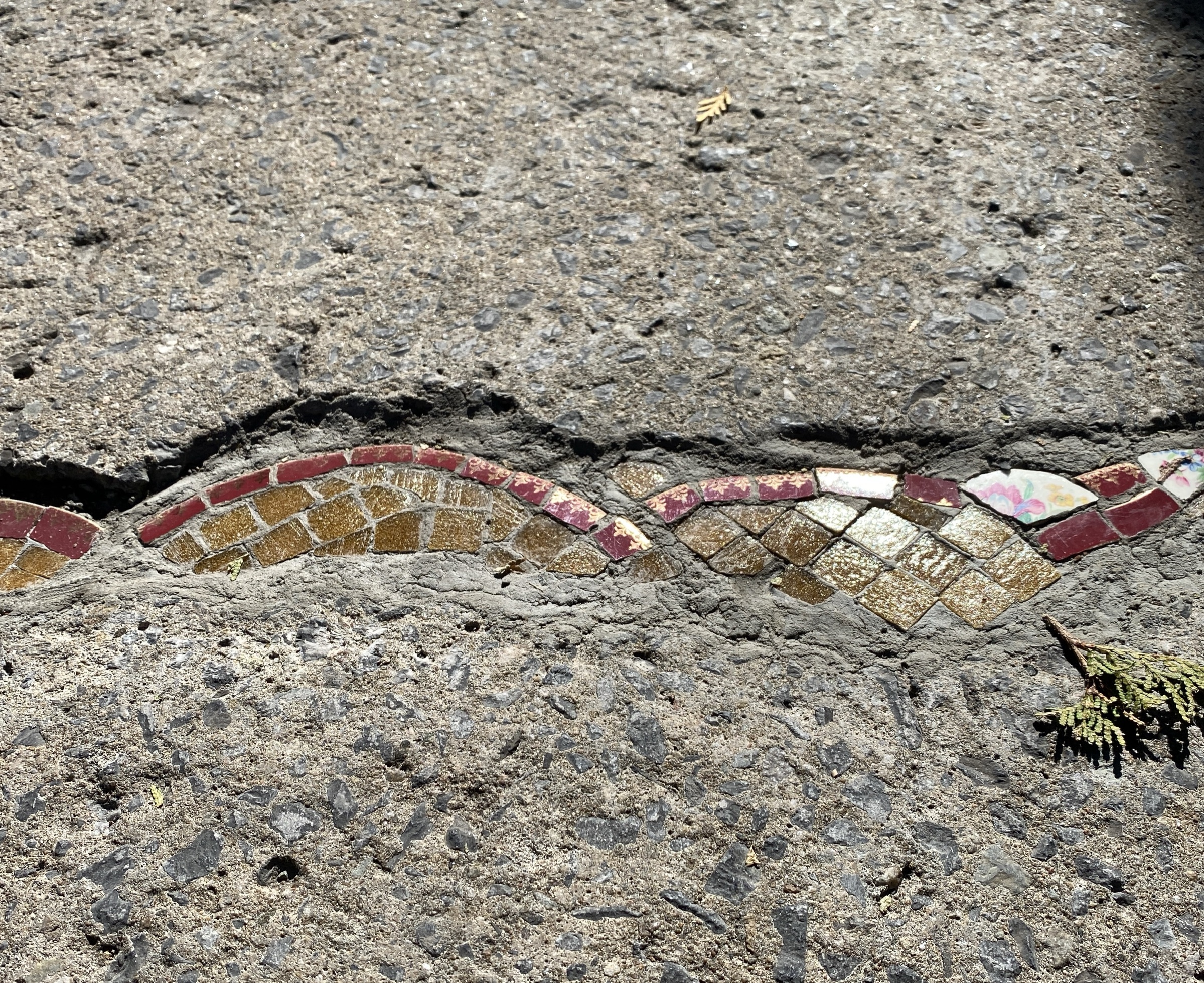
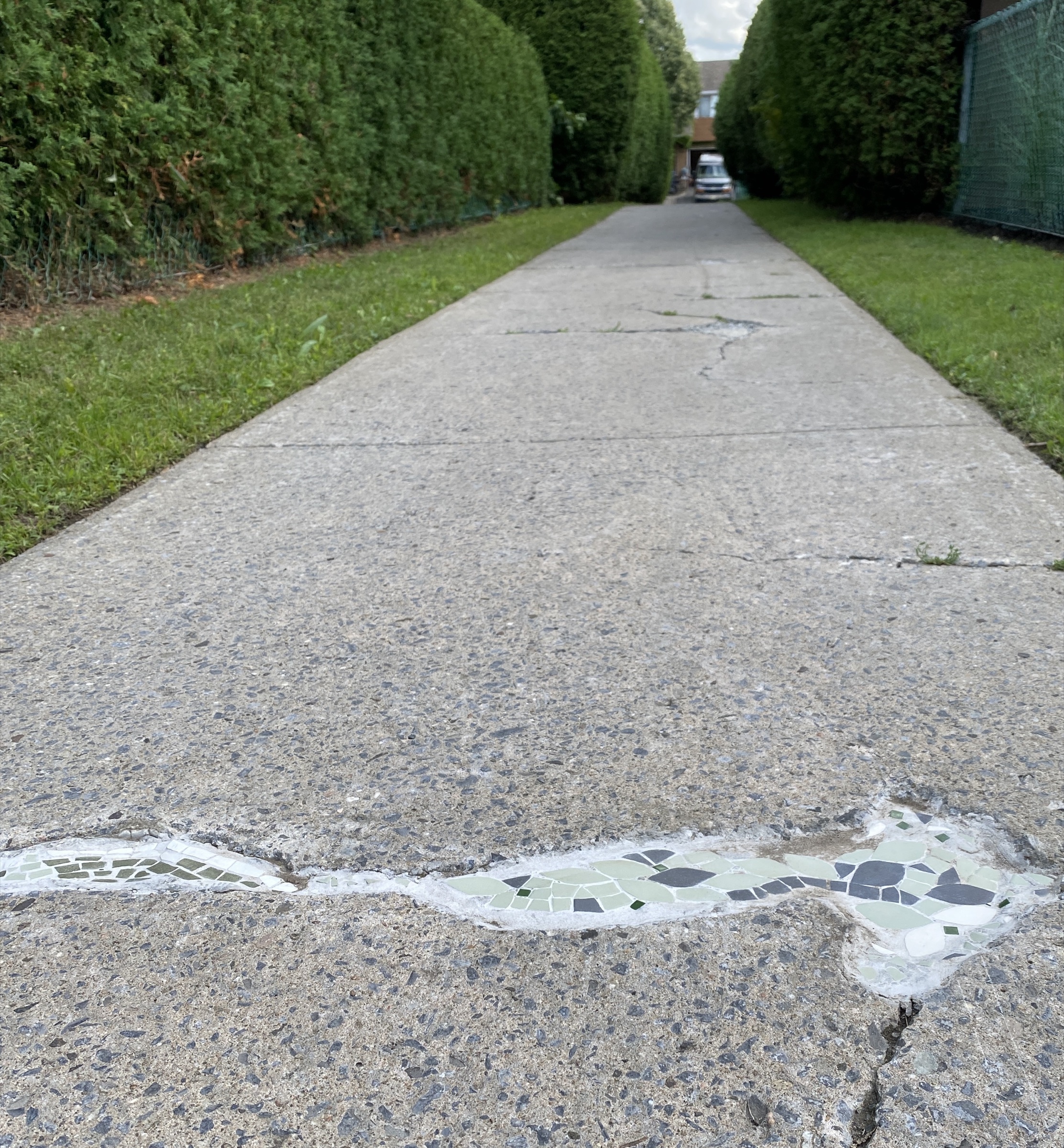
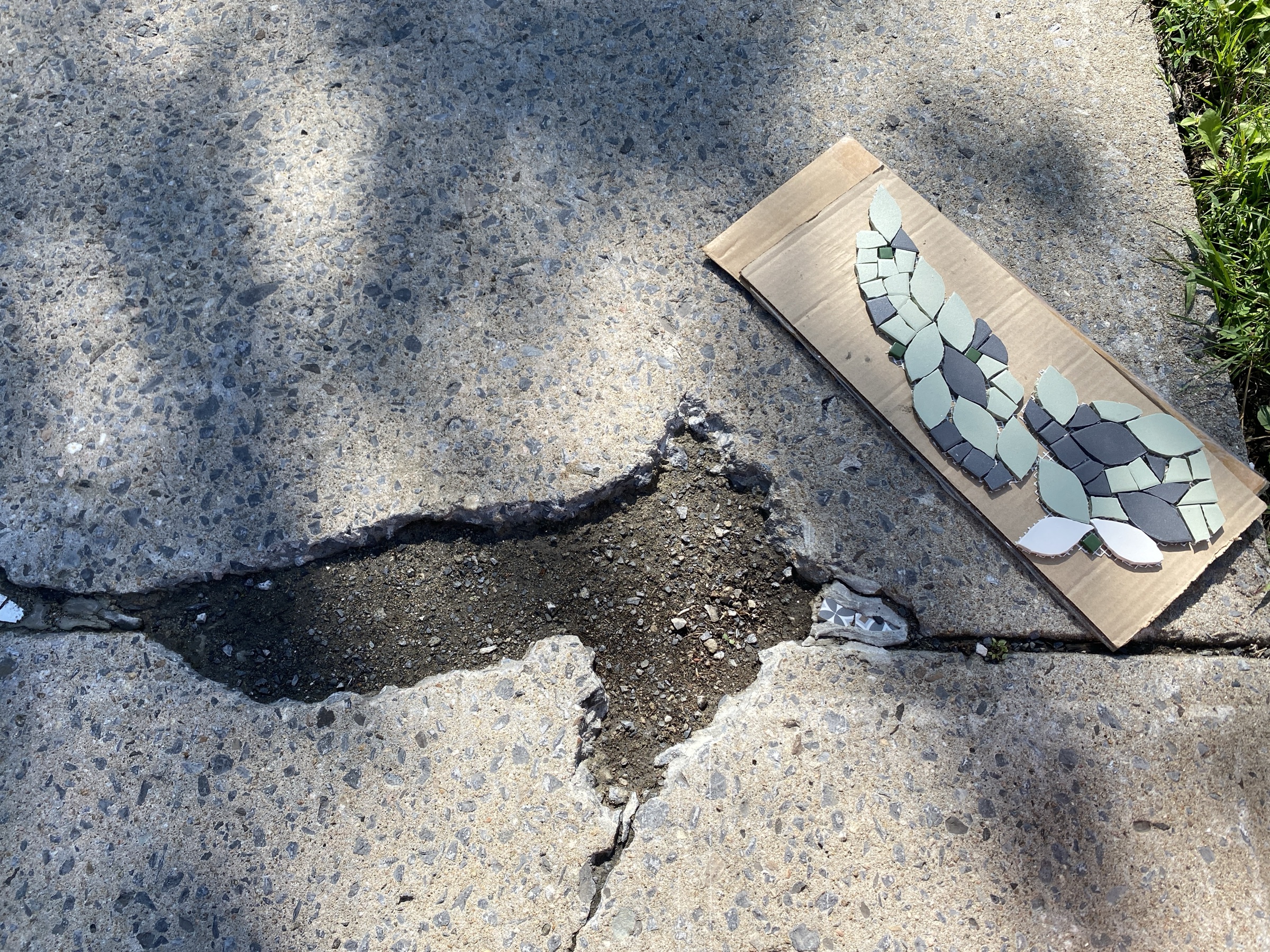
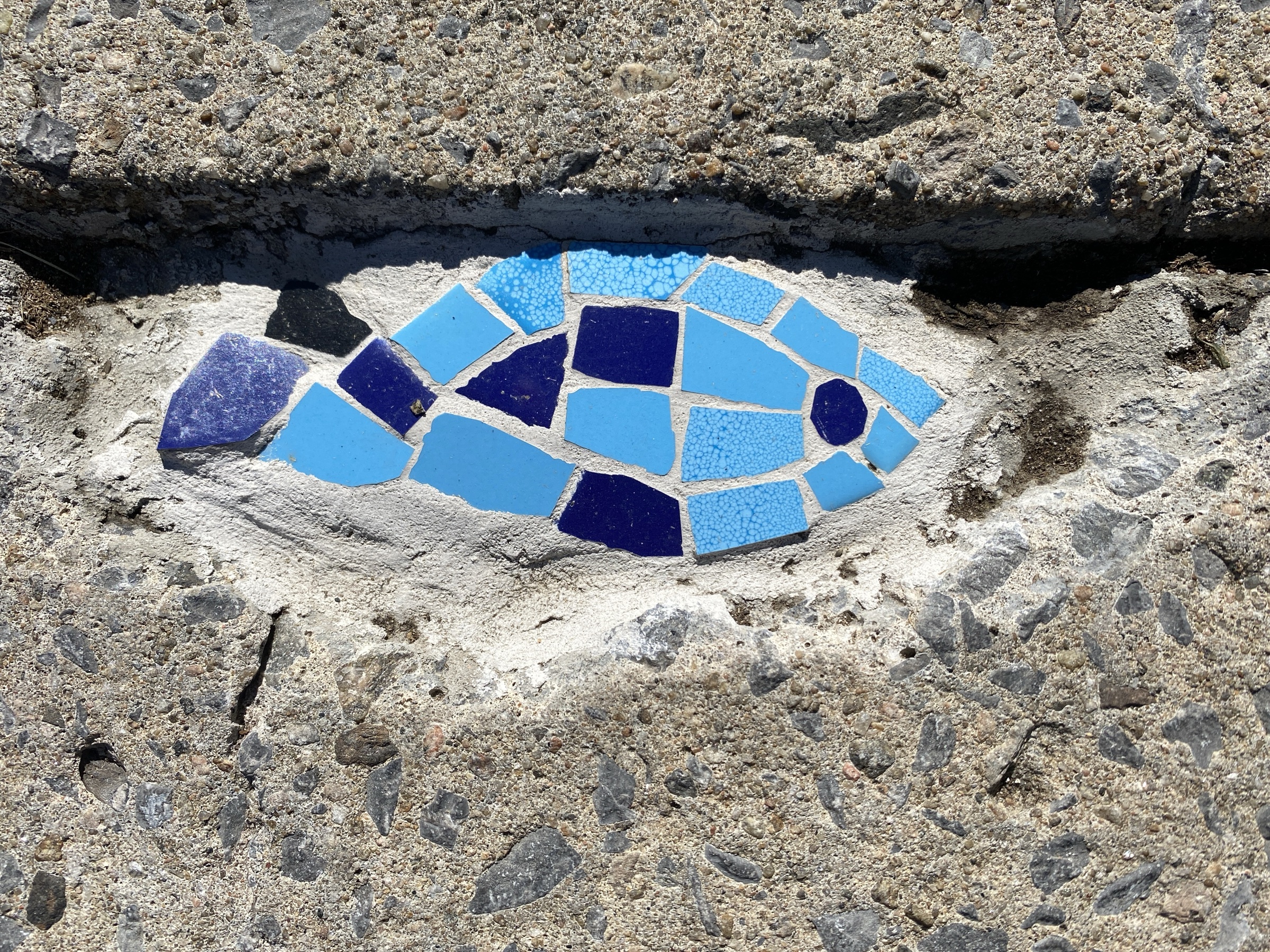
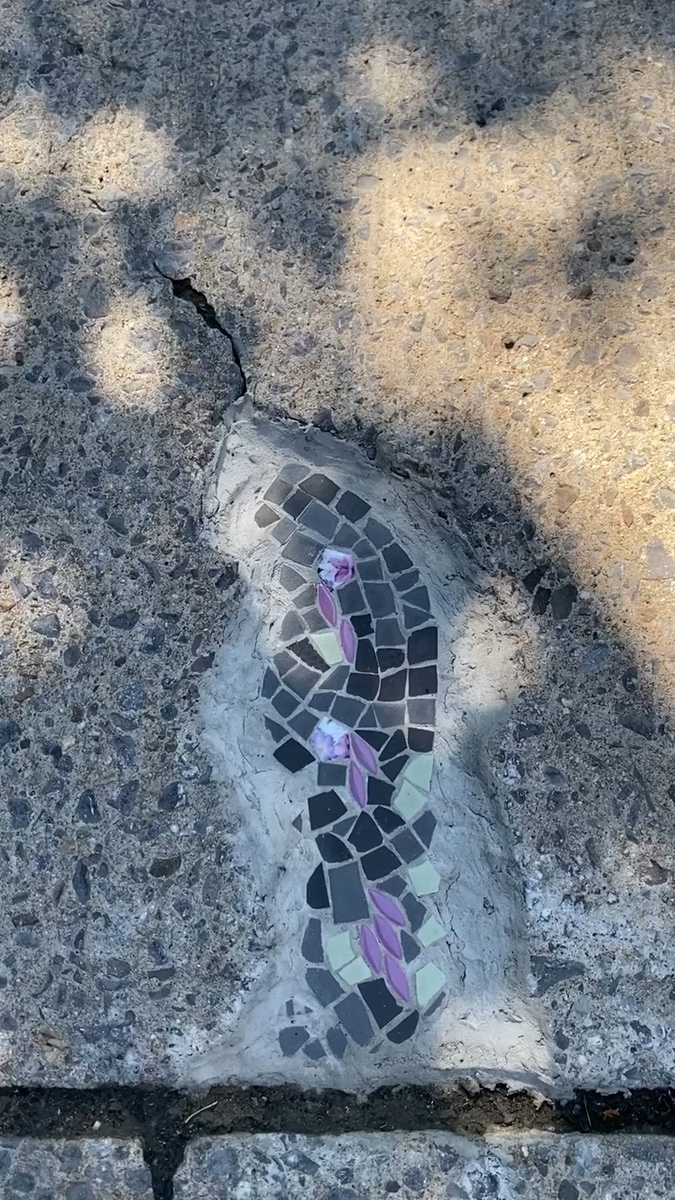
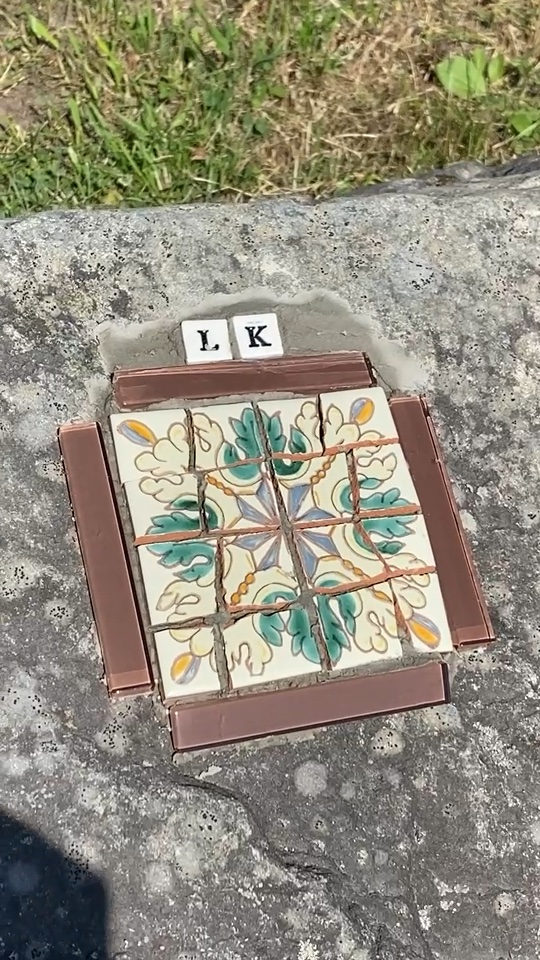
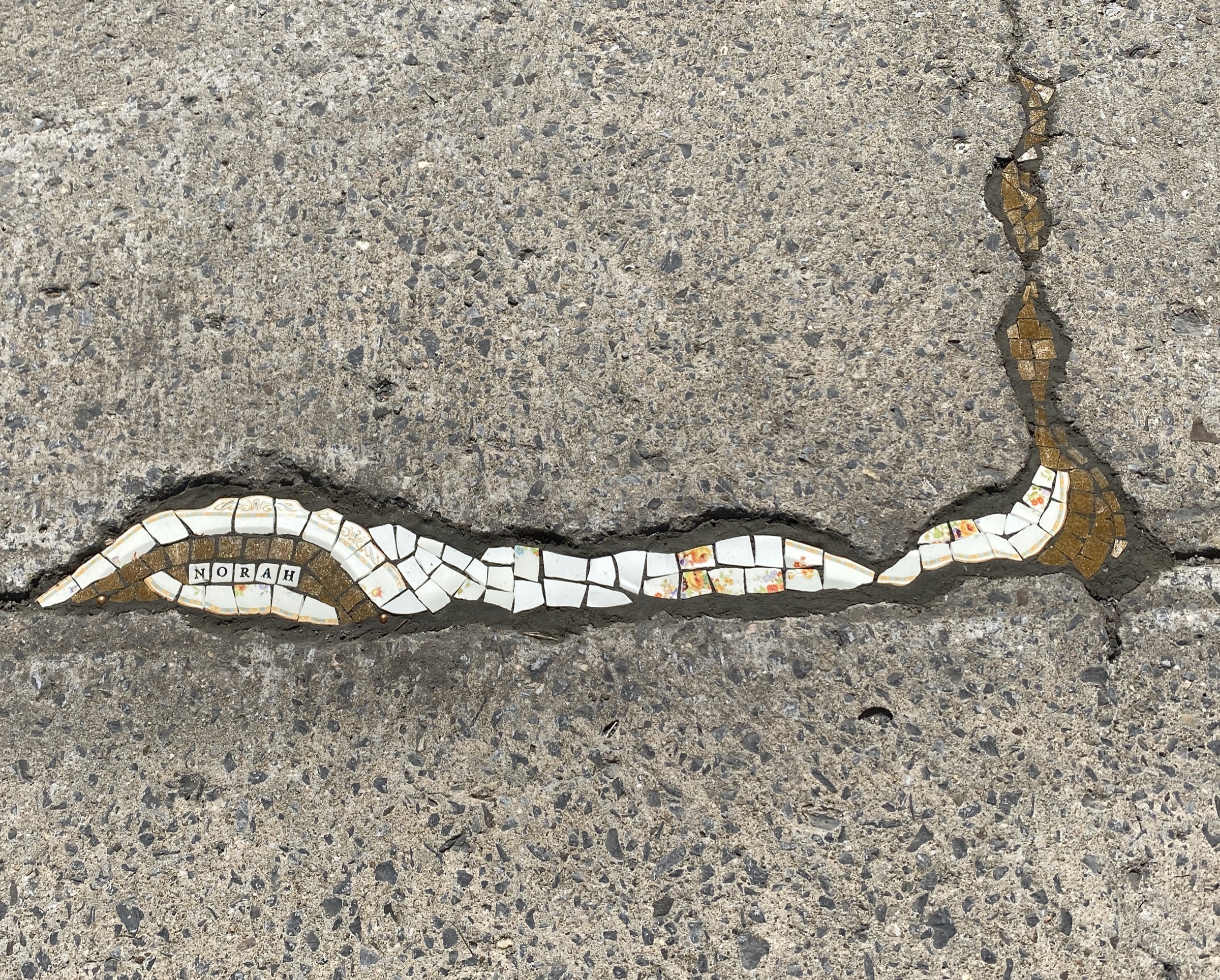
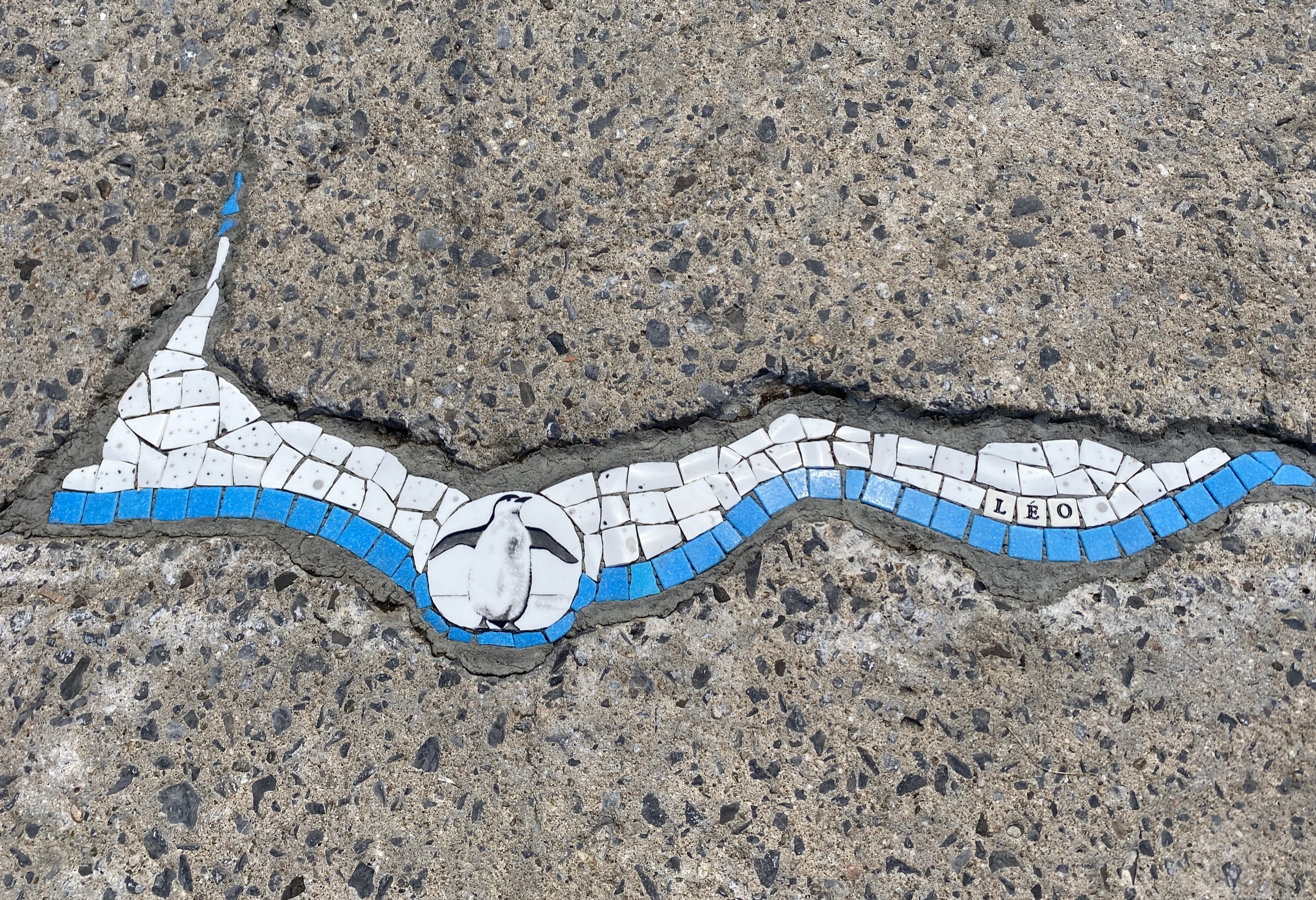
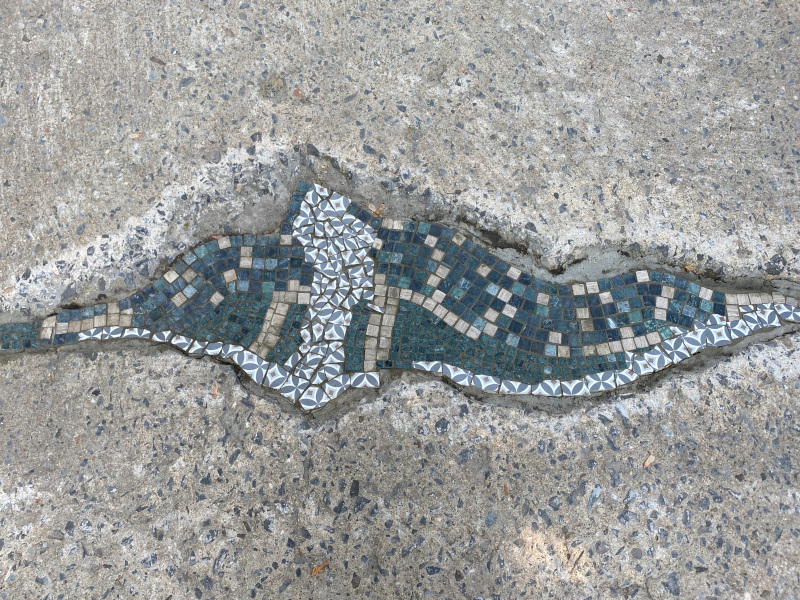
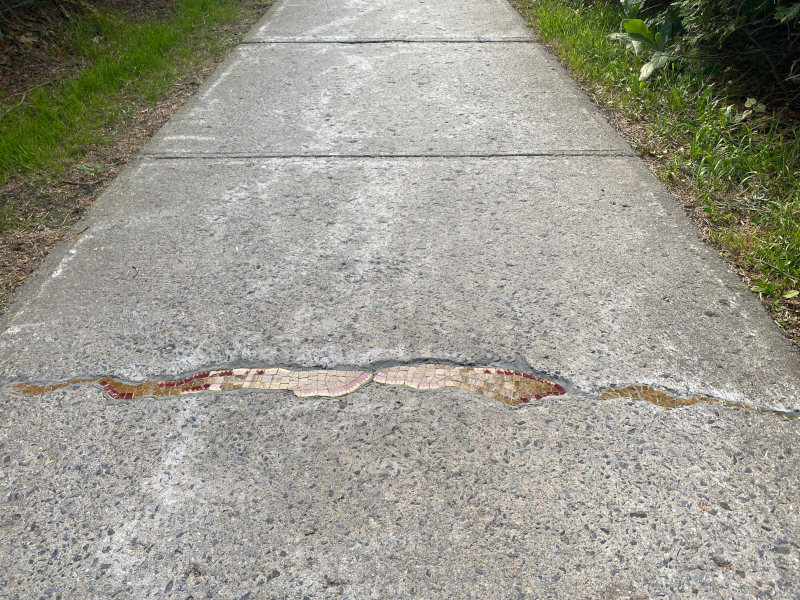
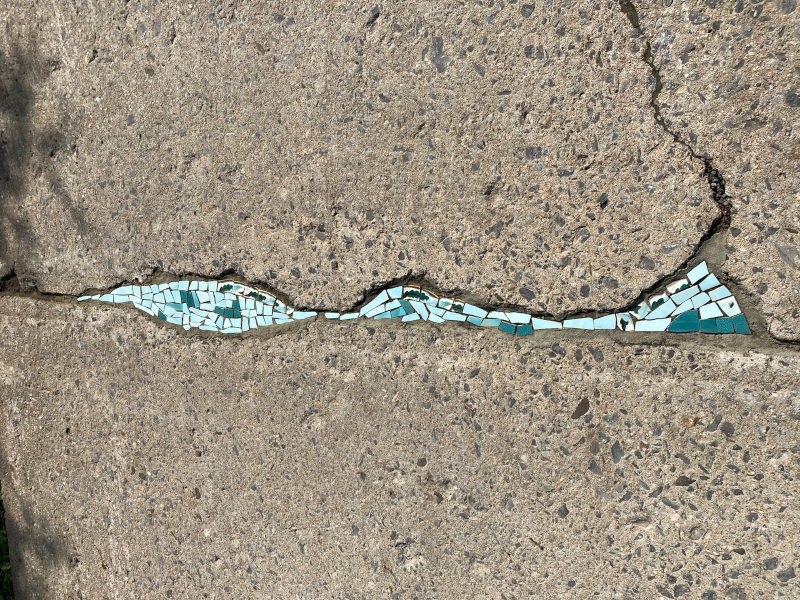
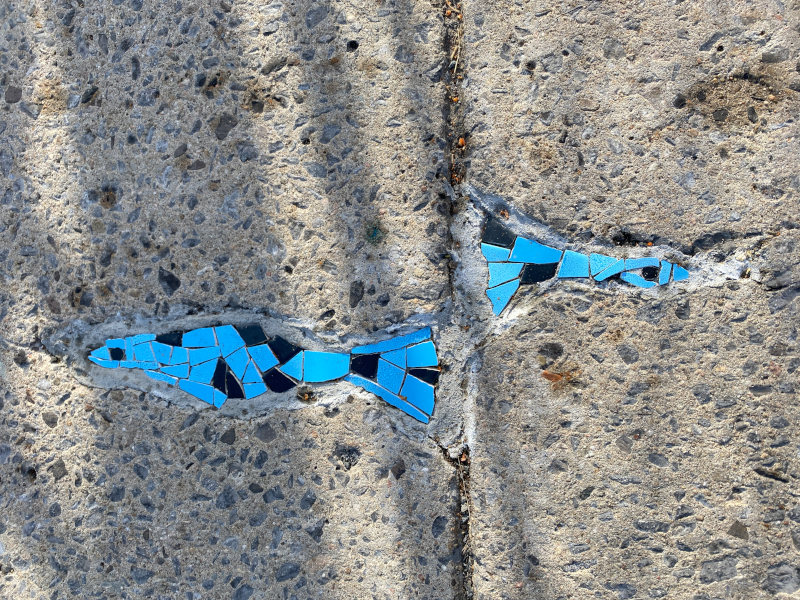
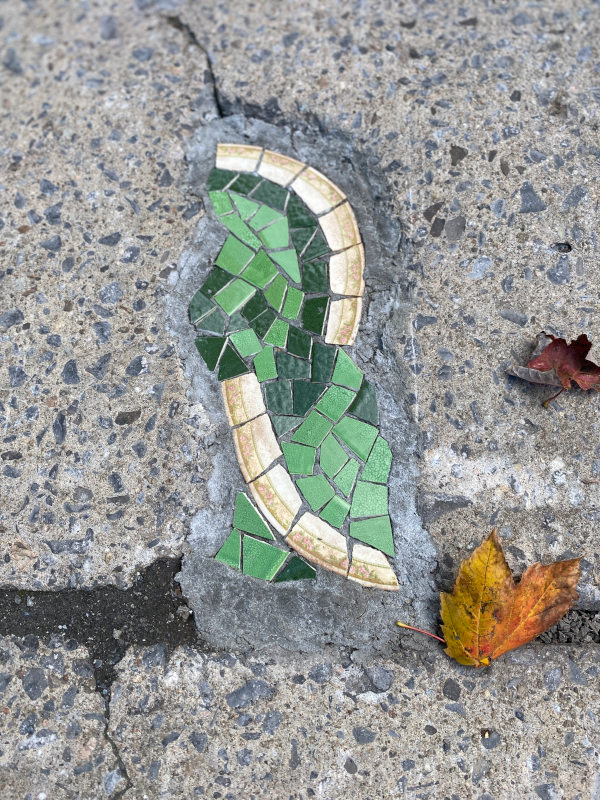
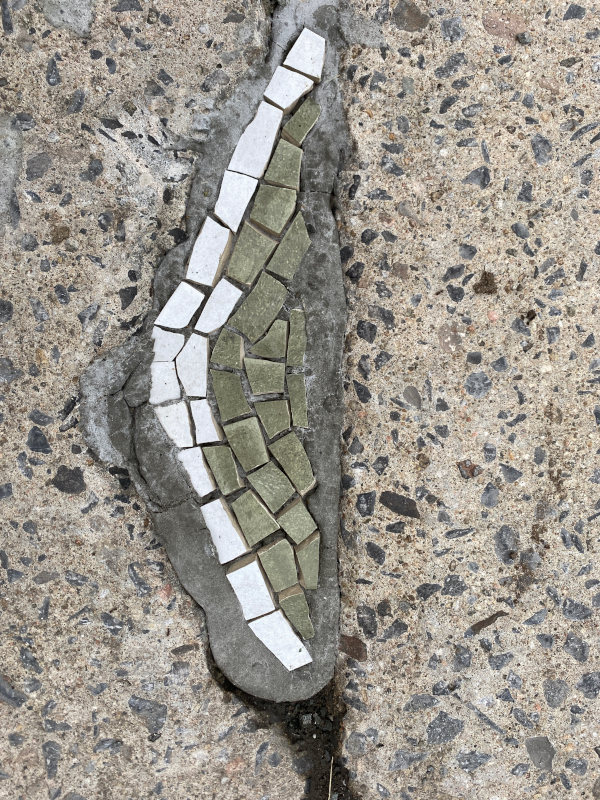
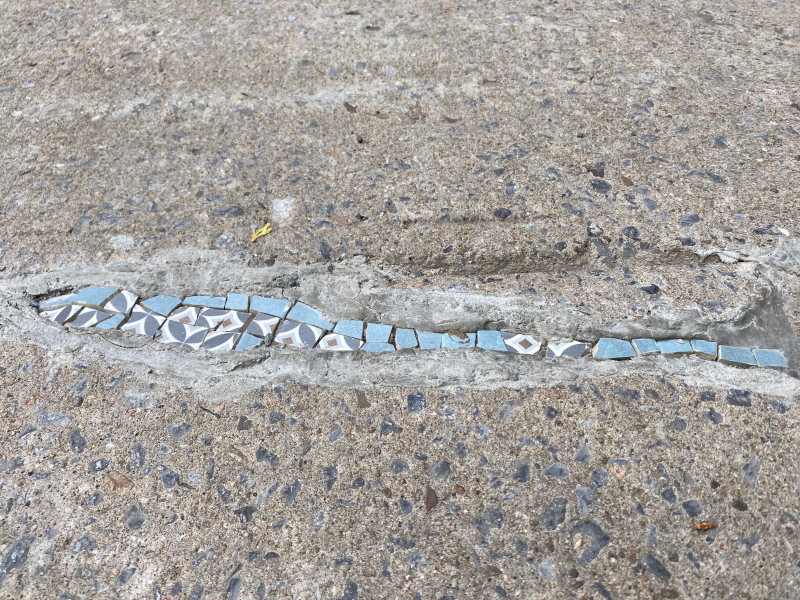
My sidewalk mosaics are site-specific artistic interventions that originate in the cracks and irregularities of the urban landscape. By taking over these neglected everyday spaces, I turn the flaw into a place of creation and repair. I develop this practice on a personal basis, freely and spontaneously, choosing for myself the places and cracks that become the starting point of each intervention.
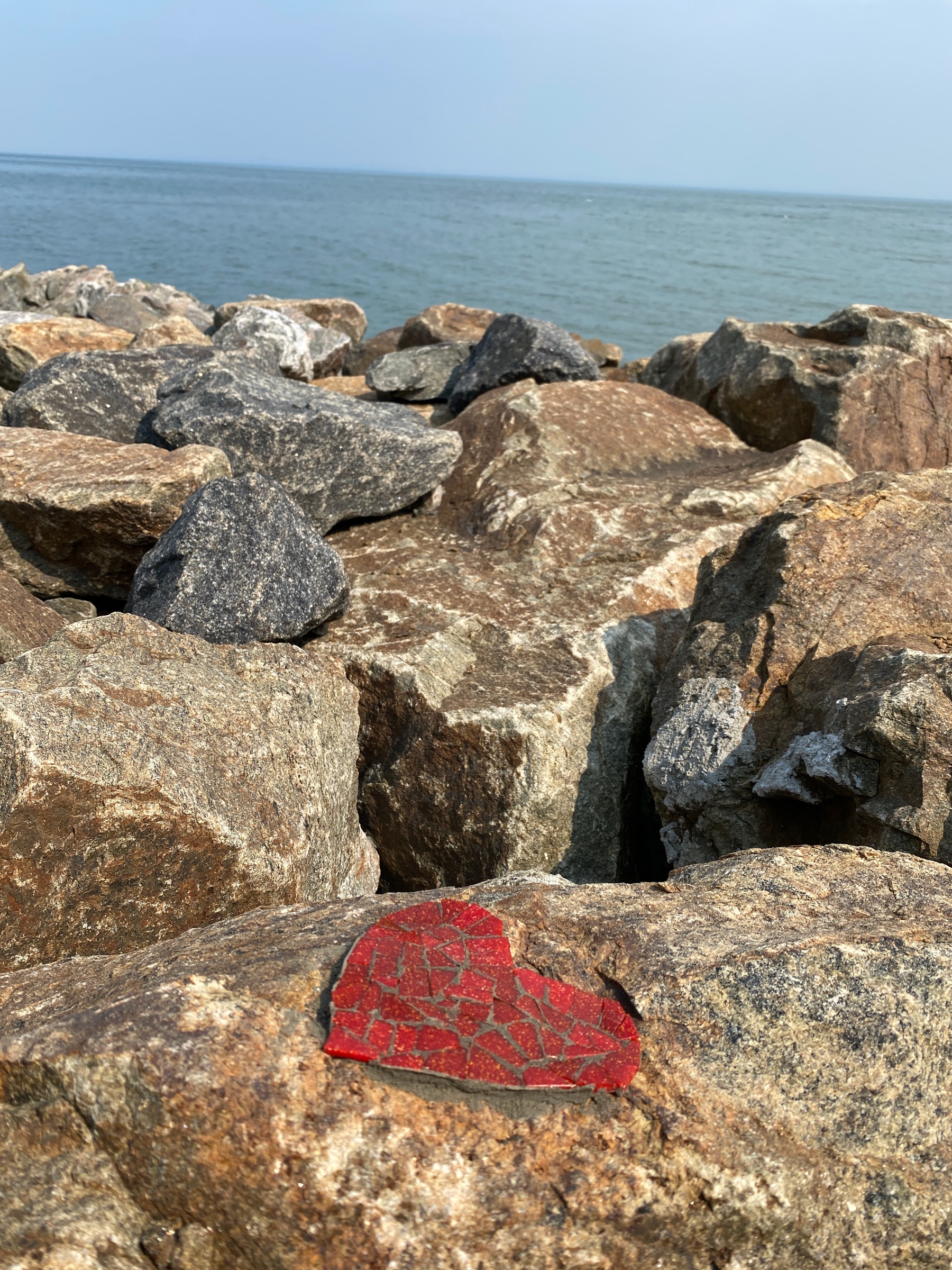
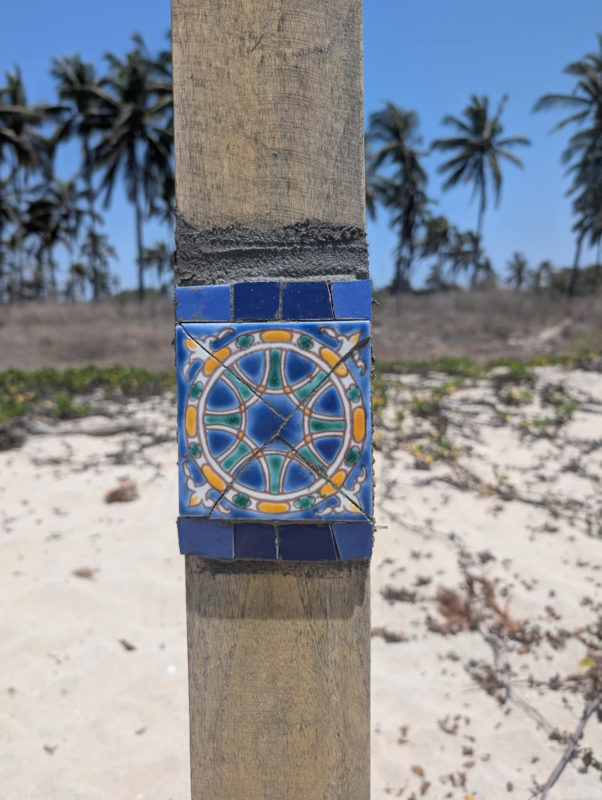
The gesture is simple but carries a symbolic dimension: rather than hiding the crack, I choose to underline it and extend it with mosaic. The fragment thus becomes material of both construction and degradation, the starting point of a new form. Each intervention enters into dialogue with the place that hosts it and with the gaze of passersby. This approach has also taken me to various places in Quebec and to Mexico, where I integrated fragments of glass and ceramic into the landscape.
These works are neither protected nor intended to be preserved. Subject to weather, freeze-thaw cycles, foot traffic and street maintenance (snow removal in particular), they change over time. Some have been repaired or replaced, and each mosaic is numbered in the order of its creation. This numbering is a trace of the project’s evolution and of my gradual intervention in the urban landscape.
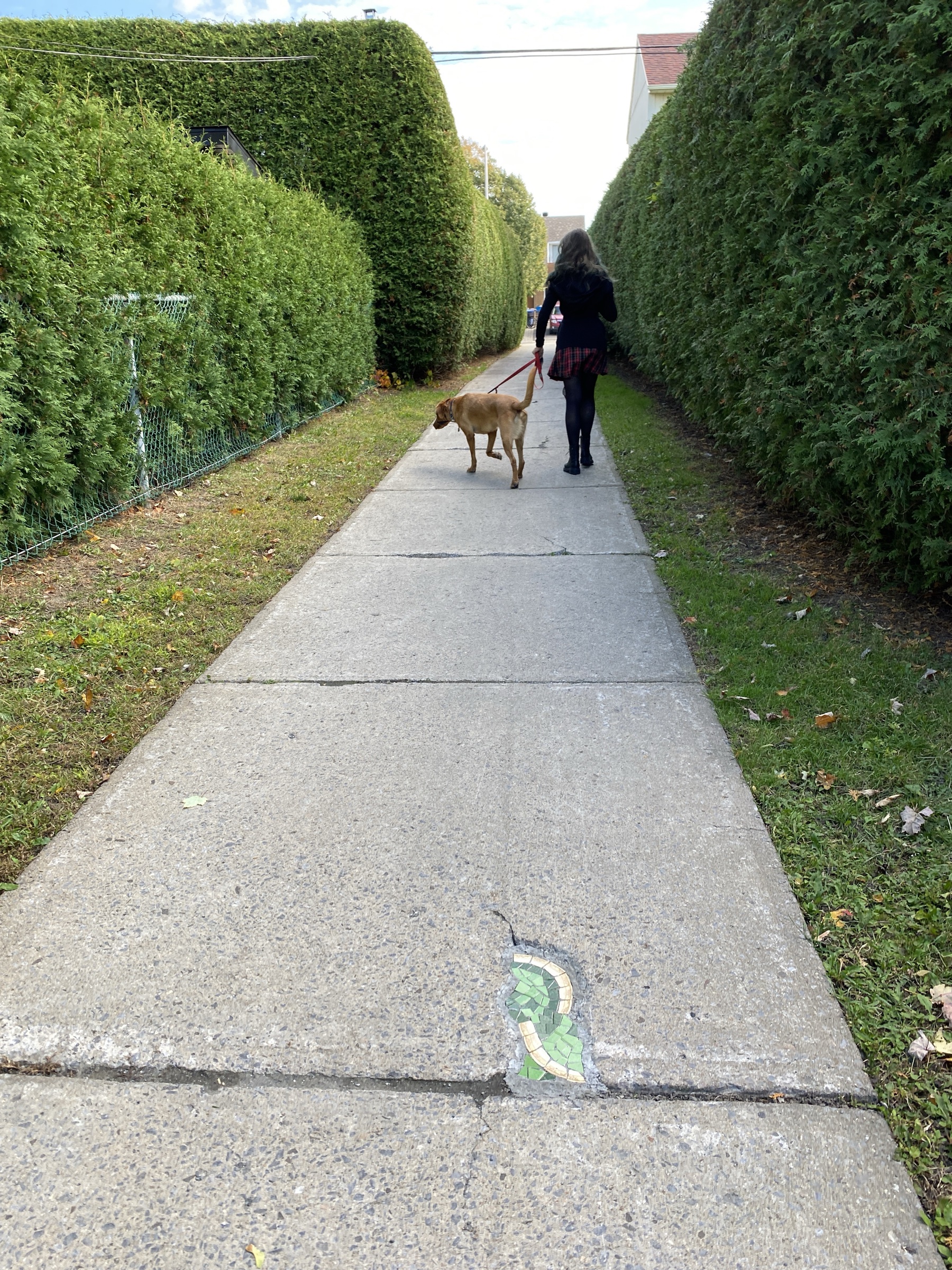
The presence of these works in public space allows for a direct, unexpected encounter with art. They may be discovered by chance, while out for a walk, in a spontaneous meeting with the work. For me, this accessibility is a way of democratizing art and bringing it into everyday life.
The fragility of these mosaics is part of their meaning: they may change, be repaired, disappear or leave a trace. Their ephemeral nature is a reminder that art, like the urban landscape and our own lives, is subject to time, accidents and transformation.
Sidewalk mosaics #1-5, 7, 8, 10, 11, 13, 15 and 16 were created in a pedestrian walkway located between Louis-J.-Lafortune and Pierre-Conefroy streets in Boucherville, Quebec.